Storm & Safety · How-to
Rip Currents Explained
Rip currents are the deadliest weather hazard on the northern Gulf Coast, and surviving one comes down to floating instead of fighting the current.
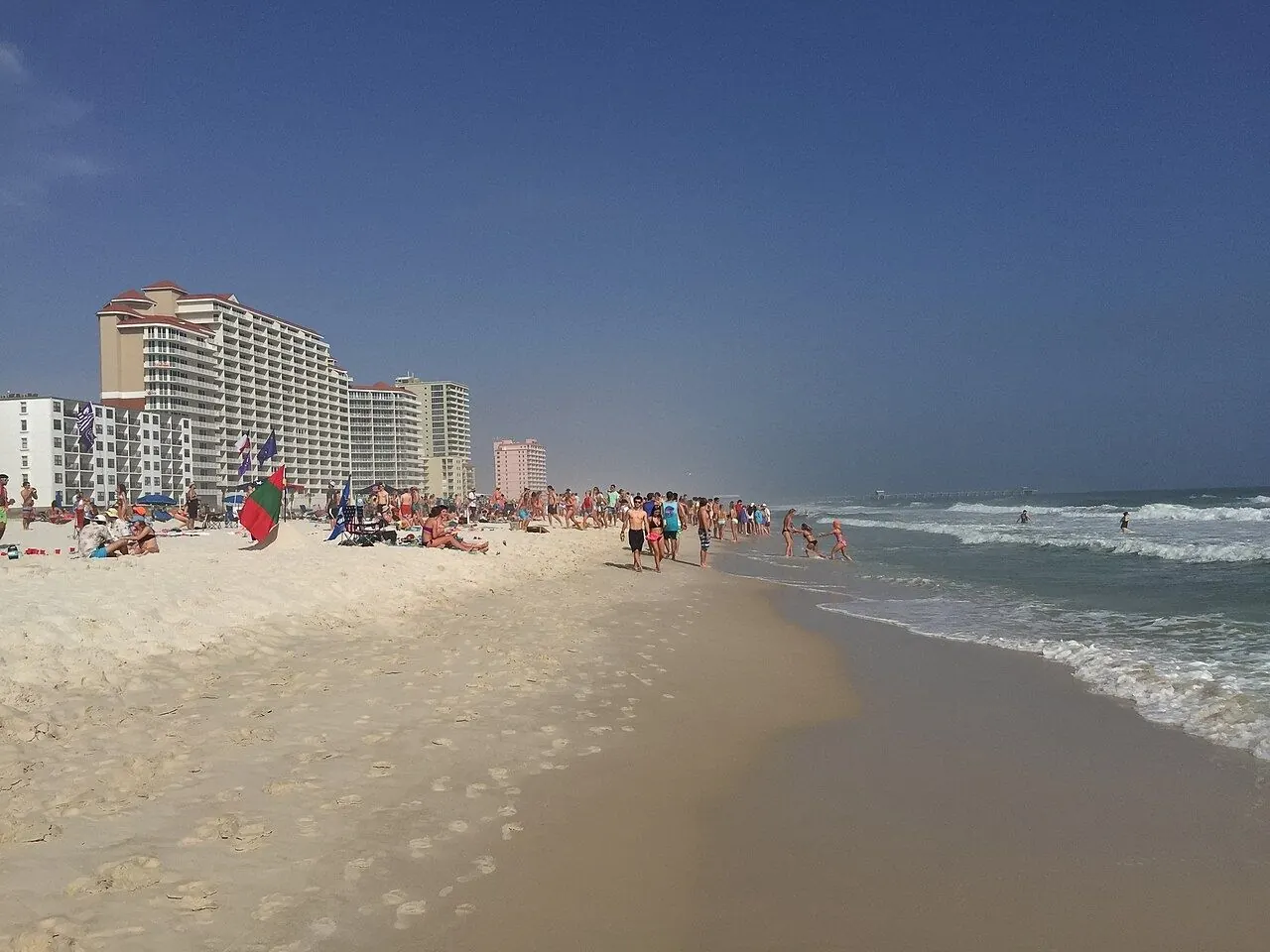
Photo: DiscoverWithDima, Wikimedia Commons, CC BY-SA 4.0
If a rip current pulls you away from shore, do not fight it: stay calm, float to conserve energy, and swim parallel to the shoreline until you are out of the current, then angle back to the beach. The best defense of all: before you go, check the local surf zone forecast from the National Weather Service.
Rip currents: what they are
A rip current is a narrow, fast-moving channel of water that flows away from shore, out past the line of breaking waves. Rip currents do not pull swimmers under; they pull them out, and people drown when they exhaust themselves swimming straight back against the flow. On the northern Gulf Coast they are the deadliest weather-related hazard: the NWS offices in Mobile and Tallahassee counted 227 rip current deaths at the beaches they cover from 2002 through 2025, more than tornadoes, lightning, tropical storms and floods combined over the same period. Rip currents often form on calm, sunny days, and they are especially likely near jetties, piers and groins.
NOAA identifies visual signs of a rip current that a wary beachgoer can look for:
- A channel of churning, choppy water.
- A difference in water color.
- A line of foam, seaweed or debris moving steadily out to sea.
- A break in the incoming wave pattern.
Many rips show none of these signs to an untrained eye, which is why swimming near a lifeguard matters more than spotting skills.
What to do if caught
Swimming directly against a rip current will not work; the current can move faster than a strong swimmer. The approach according to NOAA and NWS advice is:
- Relax and float. Stay calm, lie back if you need to, and keep your head above water.
- Swim parallel to the shoreline, or toward breaking waves, to get out of the narrow current.
- Once you are free, angle back toward shore.
- If you cannot escape, keep floating, face the shore, and wave and yell for help.
If you see someone else caught in a rip current, do not become a second victim. Get help from a lifeguard, or if none is present, call 911. If possible, throw the person something that floats, such as a life jacket, cooler or float, and keep your eyes on them while help comes. Beachgoers who try to swim out for a rescue, or form a human chain, often end up needing to be rescued themselves.
Check the forecast and the flags
The National Weather Service office in Mobile issues a daily surf zone forecast for coastal Alabama and northwest Florida that rates the rip current risk as low, moderate or high. A high risk means wind, swell and tides are extremely favorable for numerous rip currents, and the water is dangerous for all swimmers. A low risk does not mean no risk: life-threatening rip currents can still occur, especially near structures.
On the beach, the warning flags in Gulf Shores and Orange Beach translate the same conditions: red means stay out, and double red means the water is closed by city law. Pick a beach with lifeguards on duty, check the flag, and when in doubt, don't go out.
General information, checked against the sources below at the time of writing. Rules, fees, schedules and programs change; confirm with the official source before you rely on them.