Walk & Bike · How-to
Walking School Bus
A few families, a tested route and a simple schedule are enough to turn the morning drop-off into a supervised walk that can grow school-wide.
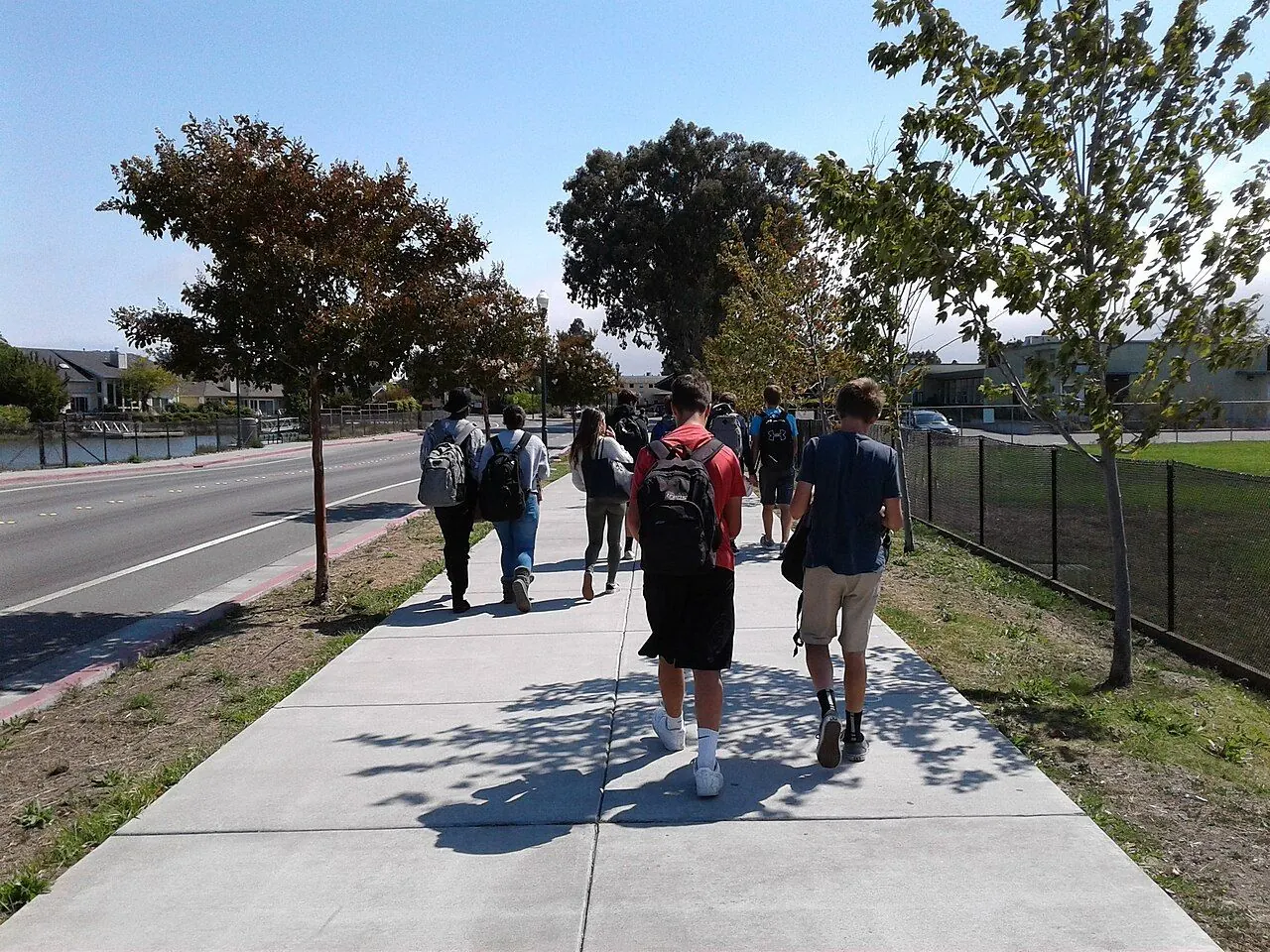
Photo: Nipponeselover, Wikimedia Commons, CC BY-SA 3.0
A walking school bus is a group of children walking to school with one or more adults, picking up kids at set stops along a set route. Starting one takes little more than a safe route, a few dependable adults and an agreed schedule; it can grow into a school-wide program later.
How it works
A walking school bus can be as informal as two families taking turns walking their children to school, or as structured as a planned route with meeting points, a timetable and a schedule of trained volunteers. The National Highway Traffic Safety Administration describes the common core: volunteer adults, usually parents, walking a specific route with fixed pick-up and drop-off times and stops. A bicycle train works the same way, with children and adult leaders riding together.
The National Center for Safe Routes to School suggests starting simple. Families in the same neighborhood decide to walk together, adults design and test a route, the group agrees how often to walk, and the bus begins. It often makes sense to run one small route first and see how it works; the program can always grow as interest builds.
Start with the route and the adults
The route is the foundation. Choose sidewalks or paths wherever possible, even if the trip takes a little longer. Keep street crossings to a minimum, avoid busy, high-speed or multi-lane roads, watch whether drivers yield and slow down, and steer clear of loose dogs, vacant buildings and poorly lit streets. A local traffic engineer or police officer can help on more complex routes, and the Safe Routes to School walkability checklist is a handy tool for walking the route first and rating it.
For supervision, the Safe Routes to School guide cites CDC recommendations:
| Children's ages | Suggested adults |
|---|---|
| 4 to 6 | 1 adult per 3 children |
| 7 to 9 | 1 adult per 6 children |
| 10 and older | fewer adults may be needed |
Adults and children should review basic pedestrian skills: what the WALK and DON'T WALK signals mean, looking left, right and left again before crossing, walking rather than running across the street, and facing traffic where there is no sidewalk. On the Gulf Coast it also pays to agree on a weather plan in advance, such as what happens on days with lightning, heavy rain or a heat advisory, and how parents will be told.
Growing the program and paying for it
To reach more children, build support first. Ask for time at a PTA or PTO meeting, present the idea to the principal, and look for allies such as the crossing guard supervisor, school nurse, PE teacher, local police, retirees and neighborhood associations. A larger program needs someone to coordinate volunteers, keep the schedule and decide on issues such as safety training and liability, so check your school district's rules on volunteers before launch.
Costs are low. A CDC study of walking school bus programs found that they can run cheaply because they rely on volunteers, with money going mostly to stipends for route leaders or a coordinator's time, and sometimes coming from PTO fundraising or a district budget line. Programs in that study that walked more often reported fewer late arrivals, though the findings rested on leaders' own observations. Bigger fixes along the route, such as sidewalks and crosswalks, can qualify for federal Safe Routes to School money, which since 2012 has come through the Transportation Alternatives Set-Aside and the Surface Transportation Block Grant program that each state's transportation department administers; in Alabama that is the Alabama Department of Transportation.
The payoff is daily activity built into the school day. The CDC recommends that children and teens get 60 minutes or more of moderate-to-vigorous physical activity each day, and its guidelines encourage walking or biking to school where it is appropriate and safe. Start with one route, one morning a week and a handful of families, and let it grow from there.
General information, checked against the sources below at the time of writing. Rules, fees, schedules and programs change; confirm with the official source before you rely on them.