Coast & Nature · Guide
Sea Turtle Nesting Season
From May through October, loggerheads and other sea turtles nest on Alabama sand, and a dark, clear beach gives their hatchlings a chance.
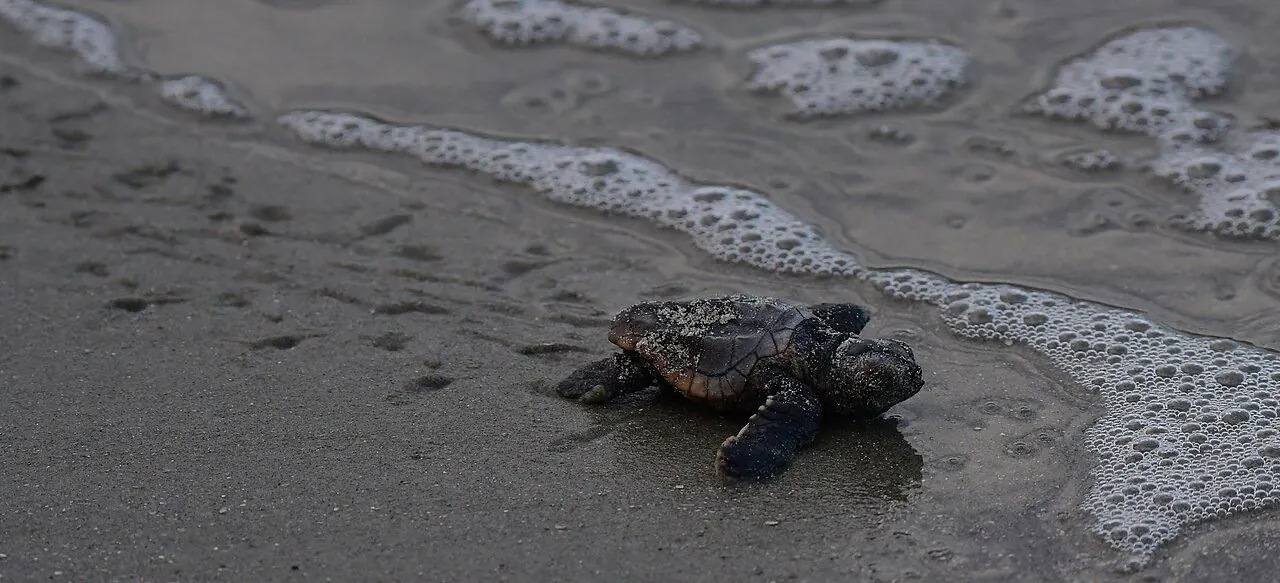
Photo: W. Gareth Rasberry, Wikimedia Commons, CC BY-SA 4.0
Alabama's sea turtle season runs every year from May 1 through October 31, when turtles nest and hatch on beaches from Dauphin Island's west end to Alabama Point. During those months, dark beaches, flat sand and a clear path to the water decide whether hatchlings make it to the Gulf.
Nesting and Hatching Season
Three species nest on Alabama's coast: loggerheads most often, plus Kemp's ridley and green sea turtles, according to Outdoor Alabama. Kemp's ridley nesting can begin in April, with most of it in May and June. A female digs an egg chamber a few feet down into the sand and deposits 80 to 120 eggs, which incubate for about two months; the Alabama Coastal Foundation puts the average nest at 110 eggs and 55 to 70 days.
The foundation's Share the Beach program is responsible for the conservation and monitoring of nesting sea turtles, and its volunteers cover all 47 miles of Alabama's beach-front coastline. Patrols begin May 1 and end August 31, and monitoring continues through October 31 for the remaining nests. Nest counts swing widely from year to year, and the foundation posts them on its nesting statistics page. Volunteer sign-ups happen before the season begins; details are at joinacf.org.
Lights, Gear and Holes
Bright lights on nesting beaches can disorient and disturb both nesting females and hatchlings, Outdoor Alabama warns. At night, turn off lights visible from the beach, close curtains and blinds, and on the sand use a red, sea-turtle-friendly flashlight instead of a white flashlight or a phone light. Turtle-friendly fixtures are red or amber and shielded, and Orange Beach's city code sets lighting standards for beachfront property during nesting season.
Under the "Leave Only Footprints" rules of Gulf Shores and Orange Beach, chairs, umbrellas, tents, coolers and toys must come off the beach each night; anything left an hour after sunset is removed and disposed of by beach patrol. Gulf Shores bans holes deeper than 12 inches, and both cities ask beachgoers to fill in every hole, since holes trap nesting turtles and hatchlings. Rules change, so check the city pages before a trip.
If You See a Turtle or Hatchlings
If you see a sea turtle on the beach at night, stay back at least 30 feet, stay low and quiet, and use no flashlights or flash photography. Never disturb a marked nest: all sea turtles that nest in Alabama are protected under the federal Endangered Species Act.
To report a nest, a nesting turtle, or hatchlings heading toward lights or a road instead of the water, call the 24-hour Alabama Sea Turtle Hotline, 1-866-732-8878 (1-866-SEA-TURTLE). For a stranded, injured or entangled turtle, Outdoor Alabama's guidance is to call the hotline right away, not to return the animal to the water, not to remove any entangling line or gear, and to keep crowds and noise down.
From May through October, the practical rule is simple: dark windows, a clear and flat beach by sunset, distance from any turtle, and the hotline number saved in your phone.
General information, checked against the sources below at the time of writing. Rules, fees, schedules and programs change; confirm with the official source before you rely on them.