Towns & Living · Guide
Mobile Mardi Gras Guide
Mobile's carnival runs on mystic societies, downtown parade routes and MoonPies, and a little history and a few city rules make the first visit easier.
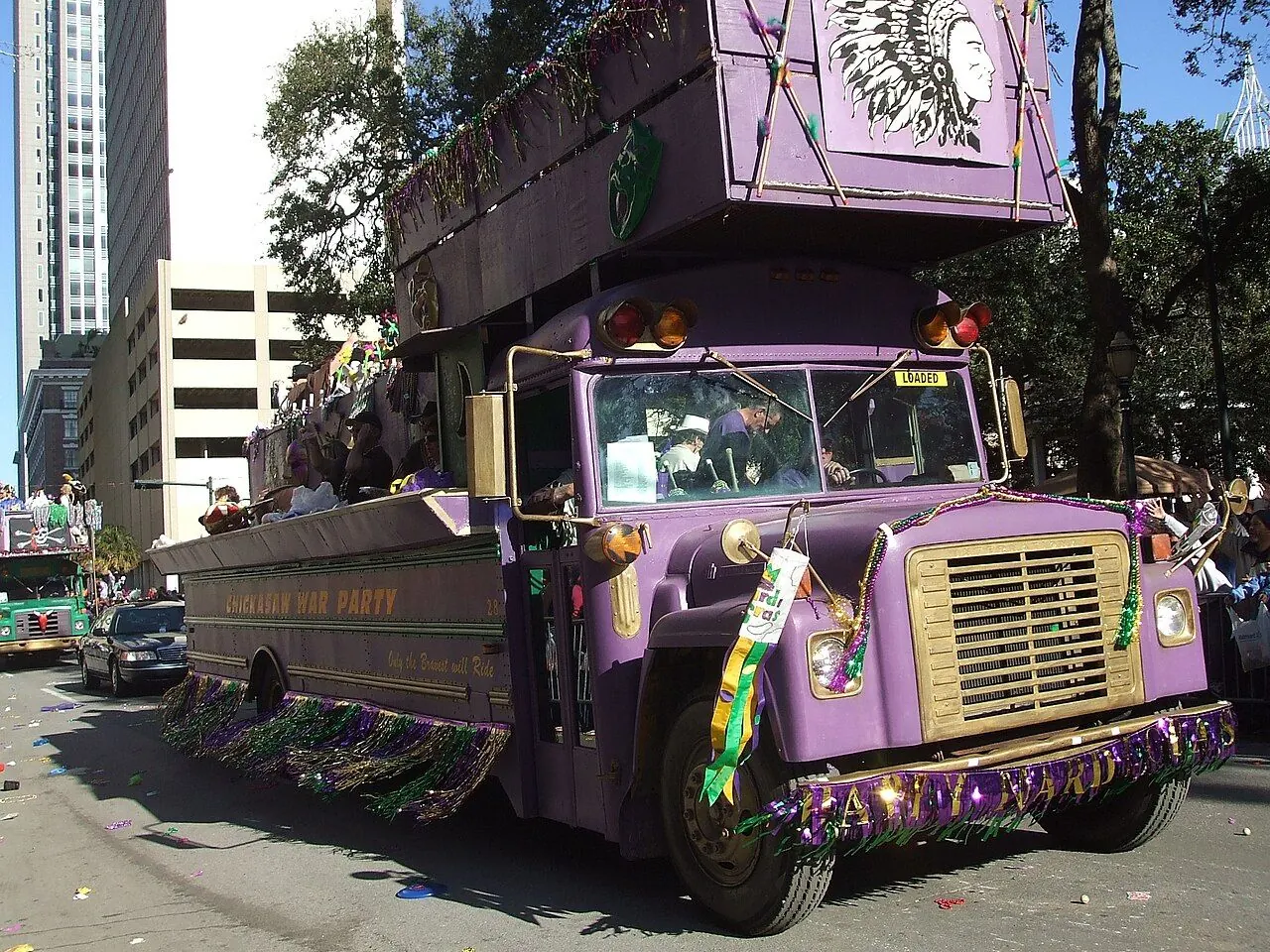
Photo: Andrea Wright, Wikimedia Commons, CC BY 2.0
Mobile, Alabama, claims to be where America's Mardi Gras began, and for a first-timer the season comes down to downtown parade routes, mystic societies, MoonPies and a few rules worth knowing before you go. Start with the history, check the city's official parade schedule, and pick a spot on the route.
Where Mobile's Mardi Gras Claim Comes From
Mobile's claim dates back to 1703, when, according to the Mobile Carnival Museum, French pioneers observed Mardi Gras at Twenty-Seven Mile Bluff, the first settlement of Mobile. Those early revelries are counted in Mobile as the first Mardi Gras observance in the New World, though New Orleans tells its own origin story.
The parade-society format still seen today took shape later, with the Cowbellion de Rakin Society in the early 1830s. The museum tells how Michael Krafft woke the mayor on New Year's Eve with rakes, hoes and cowbells, founding what it calls the first masked parading society in America. Its membership was secret, and it became the model for the city's many mystic societies, which still stage the parades and private balls. After the Civil War, Joe Cain paraded through the streets in 1866 dressed as a fictional Chickasaw chief, Slacabamorinico, and is credited with reviving the celebration and moving it to Fat Tuesday.
How the Season Works
Mardi Gras falls on a different date each year because it is tied to Easter: Fat Tuesday is the day before Ash Wednesday, which opens the 40 days of Lent, so it lands 47 days before Easter Sunday, between early February and early March. Carnival season traditionally begins after Epiphany, January 6, and builds toward that finale. In the City of Mobile, the main parade season runs from a Friday evening in the final weeks until the last parade rolls at 6 p.m. on Fat Tuesday, with more than 20 parades in Mobile County, most of them on lettered routes through downtown streets such as Government and Royal.
Joe Cain Day, the Sunday before Fat Tuesday, is one of the most popular days of the season. It features the Joe Cain Procession, often called the people's parade, which honors Cain's 1866 march.
MoonPies are the signature throw. Mystic societies began tossing them to crowds in the early 1950s, and they are soft enough to land without hurting anyone. Beads, candy and toys fill the rest of the bags that riders empty from the floats.
What a First-Timer Should Check Before Going
The Mobile Carnival Museum, in the historic Bernstein-Bush mansion at 355 Government Street, presents itself as the place to start a Mardi Gras visit. Its galleries of royal robes, crowns and scepters explain the mystic societies and the city's carnival history better than a night on the street can. Check its website for current hours and admission.
Parade dates, start times and routes change every year, so look up the City of Mobile's official parade schedule and route maps before you go. The city's published rules are worth reading, too:
- Glass containers are prohibited by city ordinance along the routes.
- Pets are prohibited during the parades downtown.
- Do not throw anything toward floats, bands or parade participants.
- Cars parked in restricted areas along the routes can be towed.
- Lost children are taken to the police Central Precinct at 55 N. Water Street until they are reunited with parents.
Arrive early to claim a spot, agree on a meeting place in case the group gets separated, and call 911 in an emergency. With a schedule in hand and a stop at the museum first, Mobile's Mardi Gras is easy to enjoy.
General information, checked against the sources below at the time of writing. Rules, fees, schedules and programs change; confirm with the official source before you rely on them.