Coast & Nature · Guide
Dauphin Island Bird Migration
Songbirds crossing the Gulf make first landfall in Dauphin Island's woods, turning a small barrier island into one of the country's great migration spots.
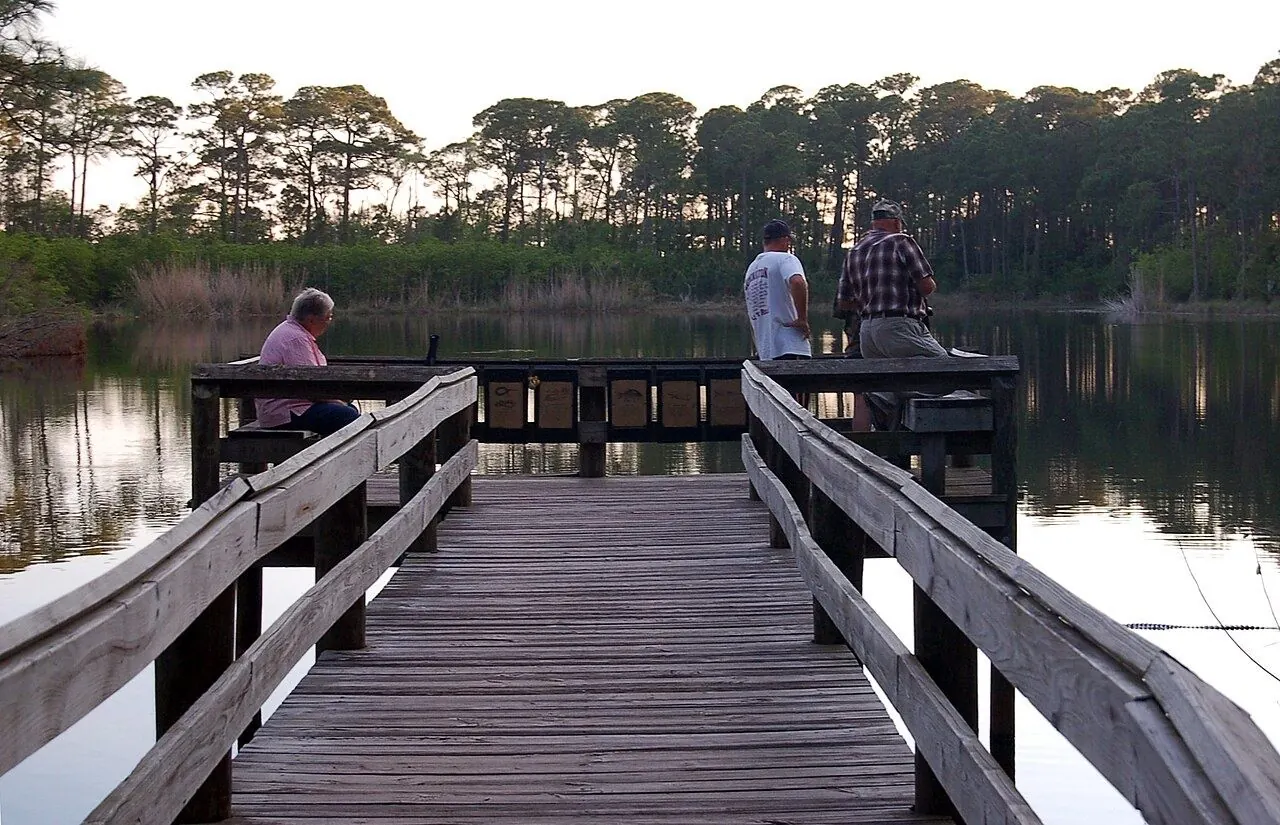
Photo: author not stated, Wikimedia Commons, Public domain
Dauphin Island is one of the best places in the country to watch bird migration: it is the first land many songbirds reach after crossing the Gulf of Mexico, and the peak runs from mid-March through mid-May. Fall migration brings a second, quieter season when the birds head south again.
Why Dauphin Island Matters for Birding
Dauphin Island is recognized as a Globally Important Bird Area. Each spring, neotropical migrants flying north across the Gulf from Central and South America make first landfall in the island's protected woods at its east end, which makes it a classic migrant trap. The National Audubon Society puts the island's bird list at more than 320 species.
The best days come with bad weather. When a cold front or rain meets birds still over the Gulf, a "fallout" can follow: exhausted migrants drop into the first wooded land they reach, and a single tree may shelter a mix of vireos, thrushes, warblers and other species. The Alabama Birding Trails guide notes that up to 20 warbler species can be seen in a day at Shell Mound Park, which it lists for both spring and fall migration.
Where to Go on the Island
With maritime forest, marsh, dunes, a freshwater lake, swamp and beach, the Dauphin Island Audubon Bird Sanctuary is the best place to focus your effort. The 164-acre sanctuary has miles of walking trails through pines, live oaks and magnolias, including a half-mile interpretive loop and a 1,000-foot accessible boardwalk to Gaillard Lake. The sanctuary's address is 213 Bienville Blvd., Dauphin Island, AL 36528; check the Town of Dauphin Island website for current hours.
Shell Mound Park, an 11-acre park on the island's north shore, shades ancient shell middens under moss-draped live oaks; park on the shoulder of Bienville Boulevard. Other stops on the Alabama Coastal Birding Trail include Cadillac Square, the Goat Tree Reserve, the Airport Marsh, the West End and Pelican Point, where wading birds, gulls, terns and shorebirds gather. At peak migration in mid-April, parking may spill onto the median of Bienville Boulevard.
In the woods, look for warblers, vireos, thrushes and other songbirds; on the beaches and flats, look for shorebirds and seabirds. Sightings vary from day to day with the weather, and posted sighting lists and local birders are the best guide to what is around.
Getting There and Being a Good Visitor
Dauphin Island is reached by the bridge on State Route 193 from south Mobile County, or from the Fort Morgan peninsula on the Mobile Bay Ferry, a crossing of about 40 minutes. The ferry does not take reservations, and its schedule shifts with the season, weather and maintenance, so check mobilebayferry.com before relying on it.
Migrants that have just crossed the Gulf need to rest and feed. Stay on marked trails, give tired birds space, keep noise down, park only where it is allowed, and respect private yards along the island's streets.
For the best odds, plan a spring visit between mid-March and mid-May, watch the forecast for a cold front with rain, and start early at the sanctuary and Shell Mound Park.
General information, checked against the sources below at the time of writing. Rules, fees, schedules and programs change; confirm with the official source before you rely on them.