Home/Archive/Healthy Coastal Communities
From the archive · Initiative
Healthy Coastal Communities
The vision behind walking to school, connected sidewalks and trails, and streets that work for every age.
From the archive. This page keeps material published on this domain by Smart Coast, a Fairhope, Alabama nonprofit, in the years around 2004–2013. It is preserved as a record; the magazine that publishes smartcoast.org today is independent and is not that nonprofit. Contact details and personal information have been removed, and pictures that no longer exist have been replaced with credited photographs.
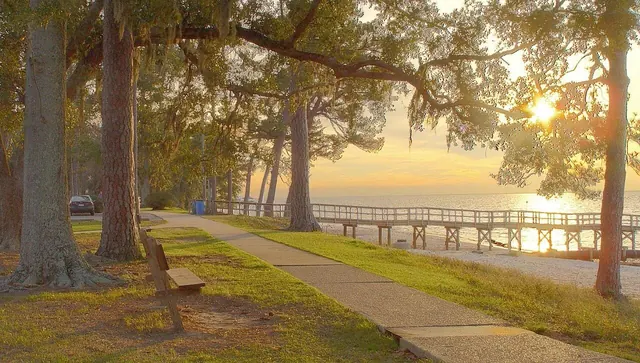
Photo: Mike Tilley, Wikimedia Commons, CC BY 3.0
Vision
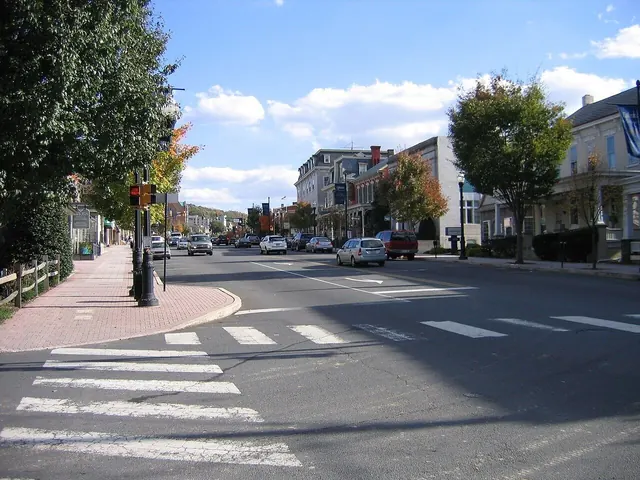
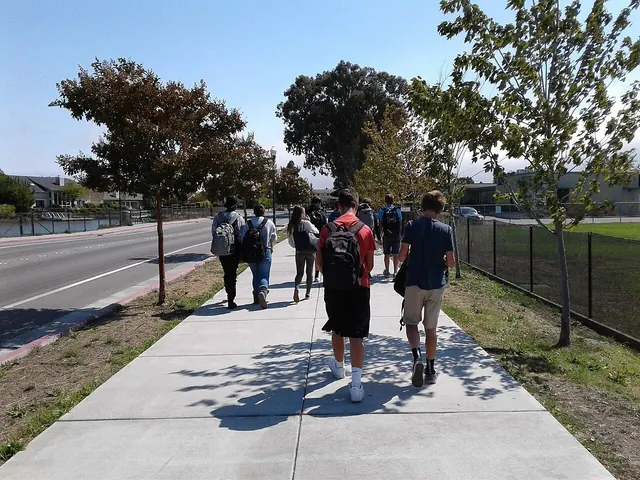
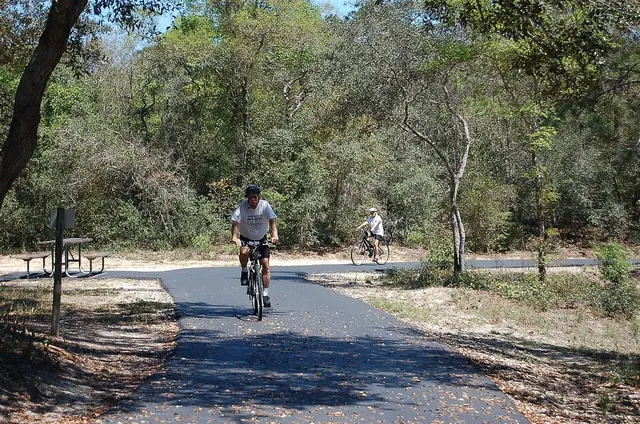
The Vision of the Smart Coast Healthy Coastal Communities is a healthy and active community. We envision a future in which children walk to school on a daily basis and everyday destinations like the grocery store and post office are connected by a network of sidewalks, trails, and streets to make the trip on foot and bicycle possible and convenient and allow our seniors to age in place gracefully if they lose their ability to drive.
Mission
The Mission of Smart Coast is to help people shape their communities to be vigorous, healthy, and flourishing for generations to come. One of the ways we will do this is by encouraging active travel such as walking to school, bicycling, rolling a wheelchair, and promoting Complete Streets which provide health, environmental, quality-of-life, and economic benefits to the community. Our current goal is to bring the PedNet model of daily Walking School Buses to the coastal region of Alabama.
Background
Smart Coast had already begun work on Smart Walks and Complete Streets, but the foundation of Healthy Coastal Communities was established via a year of technical assistance from the National Center of Bicycling and Walking via a grant funded by the Robert Wood Johnson Foundation. In this year, NCBW helped Smart Coast organize and engage a diverse group of partners and stakeholders across the region in a series of public meetings, working committees, walkability audits and a regional summit on the Dangerous by Design Report to make a call for action framed around reversing childhood obesity and increasing opportunities for outdoor activity.
Why do we need Smart Coast Healthy Coastal Communities?
- Health- Walking or bicycling makes up less than 10% of all journeys now, a fraction of its level 50 years ago, and more than two-thirds of American adults are now overweight or obese. In the span of just one generation, the number of American children walking or biking to school has plummeted from 50% to 15%, while obesity rates have soared such that one third of all children and adolescents (25 million individuals) are now overweight or obese. Alabama is the 2nd most obese state in the nation.
- Environment- As the coastal region is recovering from the 2010 Gulf Oil spill, many residents are now aware that our environment is directly tied to the health of our region. Driving children to school is responsible for 30% of morning traffic congestion in many cities. Automobile emissions in school zones create unhealthy air affecting the many children who are already suffering from respiratory illnesses such as asthma.
- Economic health costs- The estimated annual medical costs of obesity in Alabama are 1320 (millions).
- Community- Currently Alabama ranks at the bottom on all states in safety for pedestrians and cyclists.
Smart Coast Healthy Coastal Communities primary focus is on children because experience has proven that committing to the health of children will yield long term and broad reaching benefits for all. Research has shown that the single greatest predictor of adult overweight/obesity is childhood obesity. More active transportation options will not only help reverse this trend but can result in improved air quality for everyone.
We believe in transportation choice! In addition to the private motor vehicle, all students should have the option of safely walking or biking to school, disabled people should be able to safely roll a wheelchair about town, and everyone should be able to age in place in a community that honors its seniors who may no longer be able to drive their cars.
In order to achieve our vision of a healthy and active community, Smart Coast Healthy Coastal Communities applies two distinct but related methods:
- PROGRAMS that encourage behavior change, such as the Walking School Bus, walkability audits, and social marketing campaigns promoting active travel.
- ADVOCACY for policies that result in improved infrastructure, by educating policymakers about the benefits of a walkable community, and building grass-roots support for Walking School Buses, and Complete Street policy passage and implementation.
These two methods are mutually reinforcing. Walking School Bus Programs allow students an opportunity to get exercise while getting to school under their own “foot power”, which helps them to stay more active all day long. Another benefit includes increased attention in school which often translates into better grades. Other programs such as walkability audits allow citizens a fun, interactive way to understand how the built environment can be altered to make it safer to walk, bike, and use wheelchairs. At the same time, these programs build public advocacy for Complete Street policies that improve the infrastructure throughout our communities. As better infrastructure is built, more places become available where all citizens can chose a mode of active transportation.
Advocacy Academy Training
A Smart Coast program director was able to attend the first Advocacy Academy for training to help further develop and sharpen advocacy skills to advance childhood obesity policies that can help prevent childhood obesity. The training was held on October 31-November 1, 2011 in Jackson, MS. and was funded by the Robert Wood Johnson Foundation (RWJF). Its plan is to build the capacity for advocates in 15 states while piloting the training in MS and AL, currently ranked 1st and 2nd in obesity rates in the nation.
Collaborative partners include the City of Fairhope, Baldwin County School system, and Physician Champions.